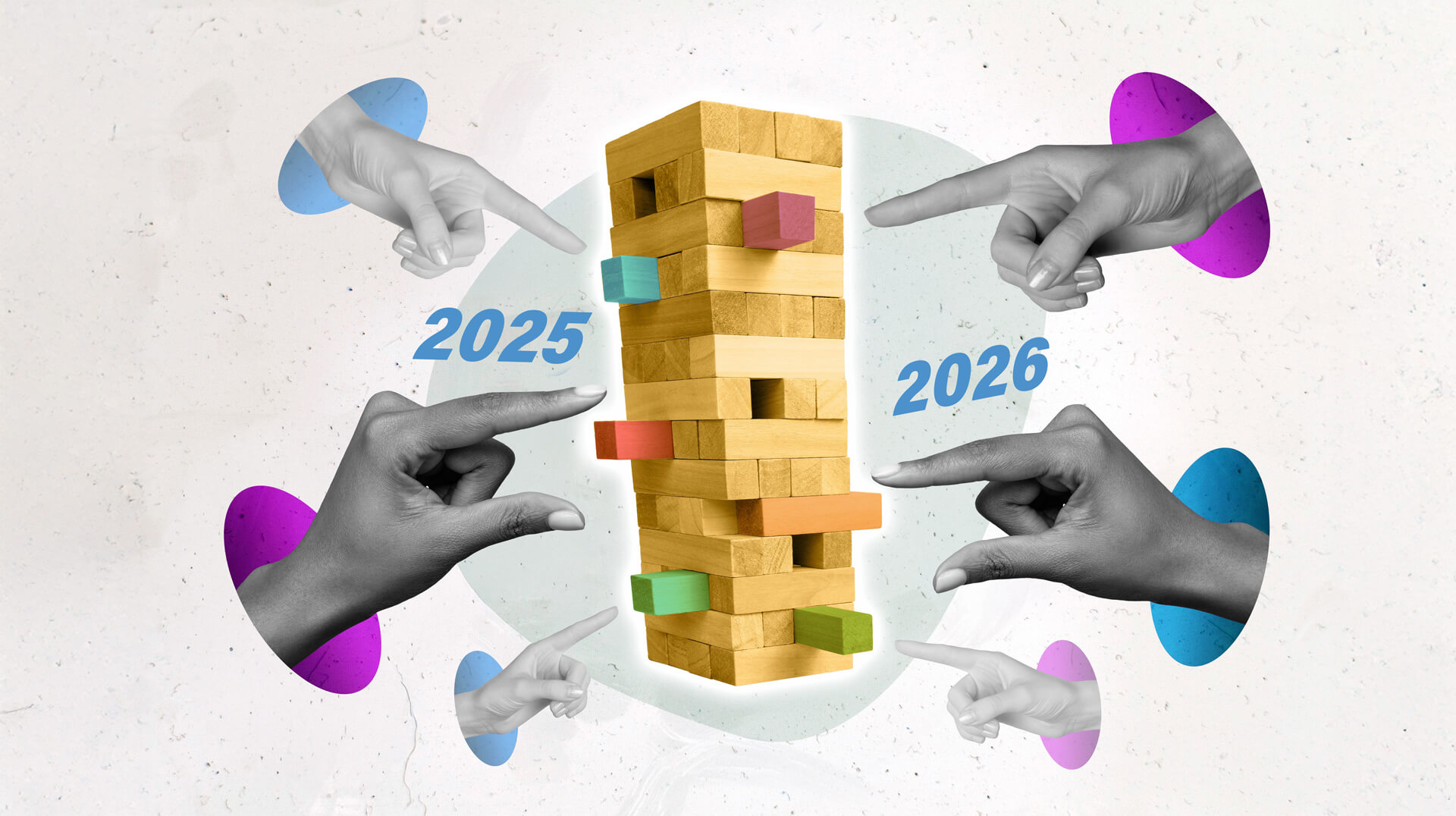
If 2025 demonstrated anything for the media industry, it’s that change now moves fast. Mega-mergers, surprise spinoffs, editorial overhauls, AI disruption and platform fragmentation collided into one of the most consequential years in modern media. And if early signals are right, 2026 won’t be quieter—it will further reshape who owns the news, how it’s distributed and which voices actually get heard.
For corporations, this evolution isn’t just a curiosity; it’s a strategic risk and an opportunity. As search changes (again) and AI intermediates more of how audiences discover information, credibility becomes harder to earn and easier to lose, with traditional media playing an outsized role in that calculus.
Here’s the through-line heading into 2026: media consolidation is accelerating at the same time channels and platforms are expanding because trust is fragmenting. Those forces need to be held together to understand what comes next.
And the stakes are clear. The next year will determine not only which media brands survive and thrive, but also what role they will play in shaping public understanding. Corporations and brands will need to adapt their communications strategies accordingly.
CNBC, MS NOW and CNN Prepare for Life Under New Ownership – and a New Era of Media Consolidation
The battle for control of Warner Bros Discovery, owner of CNN, looks likely to stay in the headlines in 2026, as the sale would mark a milestone in media industry consolidation with consequences for the future of broadcast news.
Netflix edged out Paramount Skydance to win the initial auction round with a $72 billion acquisition agreement with Warner Bros Discovery, subject to antitrust approvals as well as a shareholder vote. The Netflix offer is predicated on the long-planned spinoff next year of CNN and certain other Warner Bros cable assets.
Then a few days later, Paramount Skydance, controlled by Oracle founder Larry Ellison, fired back with a hostile takeover bid said to value Warner Bos Discovery at $108 billion. In contrast to the Netflix offer, the Paramount offer would include CNN, according to initial reports.
A Paramount Skydance victory could have consequences for CNN’s talent and editorial direction. The Guardian reported Ellison had discussed the possibility of firing CNN on-air personalities disliked by the administration. David Ellison, CEO of Paramount Skydance, has signaled a willingness to disrupt traditional newsroom culture through his acquisition of The Free Press and the installation of its founder and editor Bari Weiss as editor-in-chief of CBS News.
Versant Takes Shape and MS NOW Emerges
Meanwhile, Comcast is reshaping its media portfolio by spinning off CNBC, MSNBC (now MS NOW), USA Network, E!, Syfy, Oxygen and a portion of its digital businesses under a newly formed company: Versant. The move reflects an industry-wide recognition that traditional cable television is in structural decline, and that media companies increasingly need to separate legacy assets from growth opportunities.
Versant has filed to list on Nasdaq with an estimated valuation near $7 billion. Mark Lazarus has been tapped as CEO, and the new entity is positioning itself as a streamlined portfolio focused on news, live events and entertainment brands in a linear-TV environment that continues to contract.
In mid-November, Comcast officially rebranded MSNBC as MS NOW. Rebecca Kutler continues to lead the network. The new brand emphasizes a faster digital cadence, a push to stay relevant to younger audiences and expanded streaming ambitions alongside ongoing talent shifts, including hires from The Washington Post, Bloomberg and The Hill.
CNBC remains steady through the transition. KC Sullivan continues as network president and David Cho as editor-in-chief. The network remains central to Versant’s business model as one of the few cable networks still commanding premium ad rates, driven by its C-suite and investor audience.
The Next Wave of Media Mergers Is Already Lined Up
Versant’s formation and MS NOW’s reinvention are big moves but they’re part of a broader pattern: ownership is consolidating and dealmaking is increasingly shaped by regulatory and political dynamics.
Paramount Global and Skydance have completed their $8+ billion merger, reinforcing how transaction outcomes now hinge on more than financial logic alone.
Warner Bros Discovery sits at the center of the next round of speculation. Paramount Skydance has pushed for a full acquisition, Comcast has positioned itself around select assets and Netflix is evaluating whether additional properties would diversify its content engine and distribution leverage.
In practical terms, the next wave is likely to bring:
- More mega-studios with vertically integrated streaming ecosystems
- More structural splits separating declining linear networks from growth businesses
- More politically influenced dealmaking, where outcomes depend on more than balance sheets
The ownership map is becoming less stable, more strategic, and in many cases, more overtly political.
What This Means for Corporations Seeking Media Coverage
These deals aren’t just a reshuffling of broadcast and entertainment brands. They’re changing the architecture of influence: who controls distribution, where credibility is manufactured and how narratives spread.
Consolidation is creating fewer, more powerful control points. A smaller set of owners now command cross-platform portfolios spanning TV, streaming, digital, events and talent. That can make access more efficient, but it also raises the stakes of understanding each media “family’s” incentives, risk tolerance and point of view.
At the same time, the channel universe is expanding because trust is fragmenting. Audiences increasingly follow individual reporters, niche experts, podcasters and community-driven outlets as much as they follow institutions. Independent platforms aren’t simply “alternatives”; they’ve become a primary place where influential audiences go for depth, context and persuasion.
Held together, these two trends create the defining communications reality for 2026: fewer gates, but more pathways. Bigger owners can amplify quickly, while independent voices can validate – or challenge – credibility inside specific stakeholder communities.
- Bigger gates, fewer entry points: Consolidation can unlock reach across a portfolio, but it can also narrow points of access. One relationship can open multiple doors, while one misalignment can close them.
- “House view” matters more (and travels faster): Ownership and editorial leadership increasingly shape framing and tone. Communications strategy has to reflect this reality without over-indexing on any single lane.
- Premium environments are increasingly partnership-driven: With pressure on traditional models, we’ll see more integrations, sponsorships, events and multiplatform partnerships, requiring tighter governance and message discipline.
- The trust layer is shifting outward: Independent journalism, newsletters, podcasts and creator-led analysis are becoming essential to stakeholder influence. For many audiences, trust is earned through consistency and expertise – not institutional scale.
- The new requirement is orchestration: Success will come from coordinating institutional scale (consolidated owners) and distributed credibility (independents) with one coherent narrative, intelligently tailored by audience.
- What It All Means for Impartiality—and for Trust
All of this consolidation raises a broader question: what happens to trust when power concentrates even as audiences decentralize where they place belief?
- What happens to editorial independence when fewer, more politically engaged owners control more of the distribution system?
- As influence migrates to independent platforms, how will audiences distinguish depth from agenda and credibility from performance?
- Will consolidation narrow institutional perspectives even as it funds larger reporting operations?
- How will newsroom leadership choices signal ideology, business strategy or both – and how quickly will those signals ripple across digital ecosystems?
- We’re entering an era where transparency, credibility and consistency will matter more than ever – for media outlets and for the corporations that depend on them.
The Bottom Line
Media ownership is becoming more concentrated while audiences are dispersing across more platforms and becoming more selective about whom they trust. For corporations seeking coverage and credibility, that means a new mandate: navigate consolidated power while earning distributed trust.
It is still possible to reach audiences effectively. But in 2026 it will require more than strong storytelling. It will require a clear view of the ownership map, a nuanced understanding of editorial incentives and an integrated strategy that travels across legacy outlets and the independent ecosystems where influential stakeholders increasingly form opinions, especially in an AI-driven, search-rewritten era.