Happy Earth Day 2026!
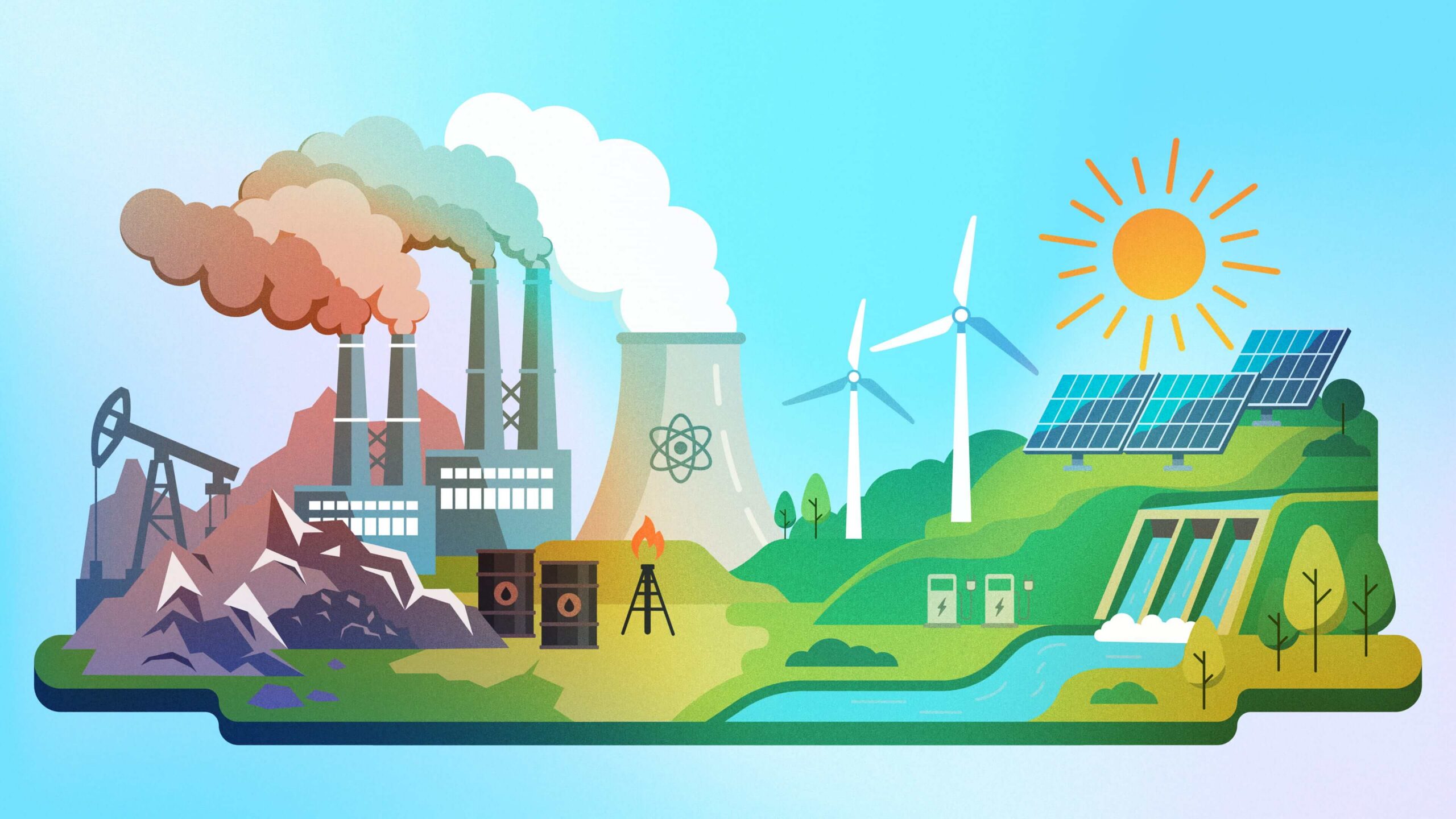
Earth Day arrives this year during a war that has upended global fossil-fuel markets, underscoring how captive the world economy remains to events in arguably the most volatile region on the planet. Paradoxically, history may look back on this period as an inflection point that accelerated the world’s transition to climate-friendlier energy sources in ways that decades of urgent warnings from academics, policy makers and think tanks could not.
To make the most of this opportunity, companies and institutions will need to reframe and clarify how they communicate about climate and the energy transition. For years, the climate narrative has been defined by what is not happening fast enough. In many ways, that framing was necessary, as it helped build awareness and drive early action. Earth Day itself emerged from that same instinct.
First observed in 1970, Earth Day was born out of growing public concern over pollution, the changing condition of the planet and a lack of accountability. It was founded on the belief that awareness and education could mobilize society to drive change. Today, diverging views on the urgency of the climate crisis are reshaping policy, particularly in the United States, introducing new headwinds to progress made around the world in recent years.
Much of today’s climate narrative is being shaped by these headwinds. Headlines are often dominated by the cancellation of wind and solar projects, policy rollbacks and political friction, creating the impression that momentum is not only stalling but reversing. This is all happening as science documents that global temperatures continue to rise, with recent years ranking among the warmest on record. That reality only raises the stakes and reinforces the sense that progress is not happening fast enough.
And yet, the broader reality tells a more complex story. Despite the United States’ withdrawal, nearly every country in the world, more than 190 nations, remains part of the Paris Agreement, underscoring a continued global commitment to climate action. Across markets and industries, investment, innovation and adoption are still accelerating. While setbacks and policy shifts are real and problematic, they exist alongside measurable progress. The challenge is not only what is happening, but how it is being understood, because the narrative surrounding climate action plays a critical role in shaping perceptions and, in turn, action.
The traditional playbook rooted in awareness and urgency is no longer sufficient. For years, climate action has been framed as a sacrifice: Do less. Use less. Give something up. While that framing helped build early awareness, a steady drumbeat of doomsday messaging can lead to fatigue and disengagement, diminishing its ability to resonate and mobilize action across society over time. It is time for the new narrative to take into consideration the progress that is being made around the globe.
According to the International Renewable Energy Agency (IRENA), the International Energy Agency (IEA), and Ember’s Global Electricity Review:
- Renewable energy now accounts for more than 40% of global installed power capacity and is approaching half, signaling a structural shift in how the world generates energy.
- 2024 marked the largest expansion of renewable energy in history, with approximately 585 gigawatts of new capacity added globally, over 90% of all new power capacity and a record ~15% year-over-year increase.
- In many markets, clean energy is now the most cost-effective option, with more than 90% of new renewable projects cheaper than fossil fuel alternatives.
- Wind and solar are overtaking fossil fuels in key markets, steadily reducing coal’s share of the global energy mix.
- Solar is driving the majority of this growth, accounting for roughly three-quarters of new renewable capacity and expanding at more than 30% annually worldwide.
Even as debates about climate change continue, economic and geopolitical forces could impact the transition to renewable energy. The ongoing conflict involving Iran has disrupted one of the world’s most critical energy corridors, with roughly 20% of global oil supply typically flowing through the Strait of Hormuz. The result has been significant price volatility, supply constraints and renewed concerns about long-term energy security. In fact, the IEA has described the situation as one of the most serious energy security challenges in history, with oil prices surging and global demand forecasts shifting as higher costs begin to curb consumption.
These disruptions are reinforcing the broader trend already underway. As governments and businesses confront the economic and strategic risks of reliance on fossil fuels, it is clearer than ever that the case for renewable energy is not just environmental, but financial and geopolitical. Energy independence, price stability and supply resilience are now accelerating the transition as much as climate policy itself. The current crisis only underscores the importance of a shift toward renewables.
Despite all of this, the challenges ahead remain significant. The gap between where we are and where we need to be is still wide. Acknowledging what is working matters because it points to something deeper than policy alone. It signals a shift in behavior. Behavior change ultimately drives lasting progress, something those of us in communications understand well. It is the clearest indicator that complex issues are not only being understood but acted upon.
What is becoming increasingly clear is that the “old” narrative no longer reflects the reality we are living in. We are in a period of rapid technological advancement and innovation, where many of the solutions to climate challenges are not about giving something up, but about moving toward something better. Clean energy is increasingly the most cost-effective option. Sustainable products are becoming more accessible. Businesses are discovering that environmental action can drive growth, not constrain it. Enlightened business and governmental leaders acknowledge this is not a zero sum game. We are living in a time of transition. We need to lean on our strength in traditional energy resources to smooth the shift toward greater reliance on renewables.
Communications must evolve to reflect this shift, not by downplaying the stakes, but by making progress visible, tangible and relevant. The opportunity is to reframe how the story is told, to show that change is not only necessary, but already underway, and that it is creating better, more efficient and more resilient ways of living and working.
There is also a need for greater specificity. Broad commitments and long-term targets have value, but they do little to influence day-to-day behavior. What matters more is what people can see and understand. Where is clean energy being adopted at scale, how are companies redesigning products and supply chains, and what choices are becoming easier for consumers and employees?
Just as important is helping people understand what this progress enables. The transition to clean energy is not only about reducing emissions, but also about meeting the rapidly growing demand for energy that is being driven by digital infrastructure, electrification and new technologies shaping modern life. Global electricity demand is expected to grow by more than three percent annually through the end of the decade, fueled in part by data centers, AI and electrification across industries.
When progress is concrete, it becomes credible. When it is credible, it becomes motivating. Communications should make clear not only that change is happening, but why it matters over time. Clean energy at scale has the potential to lower costs, strengthen energy security and drive economic growth across industries.
In 2024 alone, the world invested more than $1.7 trillion in clean energy, nearly double the amount invested in fossil fuels, and renewable energy now supports millions of jobs globally. It is already reshaping markets, creating new opportunities and supporting more resilient systems. Telling that story in tangible terms helps connect long-term climate goals to real-world impact and makes the benefits of this transition more immediate and relevant.
This is where the communications industry has real influence, not just in telling stories, but in shaping how progress is understood and experienced. When companies communicate transparently about what they are doing and how it is working, they do more than build their own reputation. They help clarify the real-world impact of change.
Clarifying that impact is only the first step. Sustained progress requires bringing all stakeholders along the journey. Employees are not just audiences, they are participants in this transition, helping to operationalize change from within. But they are part of a larger ecosystem. Customers make different purchasing decisions, investors allocate capital differently, and communities engage in new ways when progress is clearly communicated and understood. When organizations align what they say with what they do, they create a ripple effect across these interconnected groups. That is how behavior scales, not in isolation, but across the systems that shape markets and outcomes.
The climate conversation does not need less urgency, but it does need to be reframed, to move beyond sacrifice and instead highlight how innovation and clean energy are creating better, more efficient and more resilient ways of living and working. Stakeholders are more likely to act when they can see that change is real, that it is underway, and that their role within it is clear. Progress that is visible becomes credible. Progress that is credible becomes motivating.
This is the opportunity in front of communications leaders on Earth Day 2026: to move beyond awareness alone, connect action with outcomes and highlight not just what is at risk, but what is working. The role is not only to inform, but to bring stakeholders along, show how this transition is unfolding across industries, markets and communities, and make the benefits tangible and relevant.
The most powerful story we can tell right now is not only that change is needed, but also that it is already happening. It is being shaped, accelerated and sustained by the collective actions of stakeholders across society.
RF|Binder is a member of 1% for the Planet, the global organization spanning 100 countries on a mission to accelerate smart environmental giving.