Back in October, Gallup posted results of its periodic surveys on trust in the media.
Their findings:
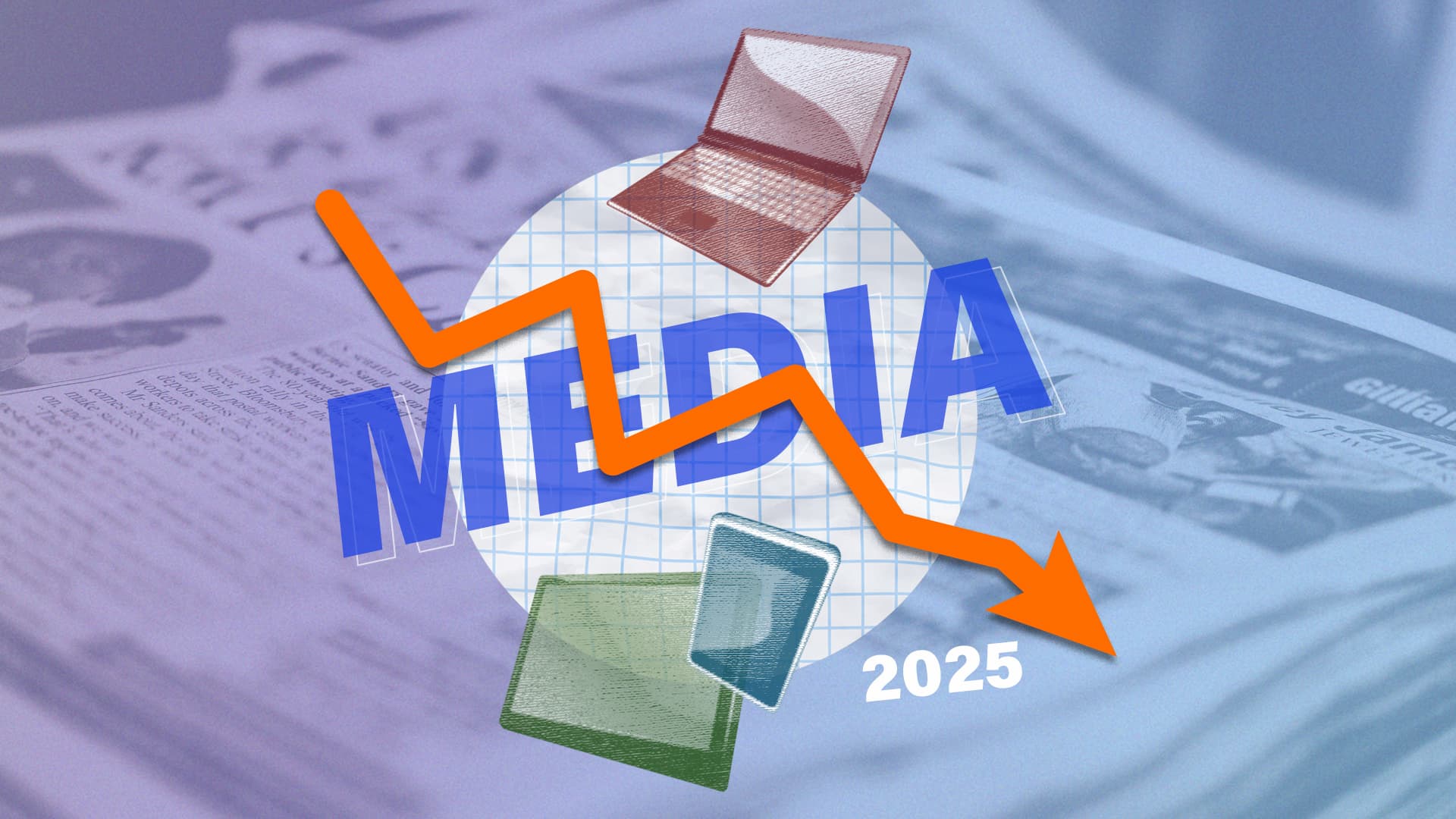
“Americans’ confidence in the mass media has edged down to a new low, with just 28% expressing a ‘great deal’ or ‘fair amount’ of trust in newspapers, television and radio to report the news fully, accurately and fairly. This is down from 31% last year and 40% five years ago.”
A related lens from Pew Research Center conducted during the same time period helps put this in context: Pew’s trend work shows Americans report higher trust in information from local news than national news — and that trust levels can shift meaningfully over short periods. Pew reported that 56% of U.S. adults say they have at least some trust in information from national news organizations, compared with 70% for local news organizations.
Now, as we close out the year and start mapping 2026 marketing and communications programs, it’s worth asking the practical question: Should declining trust in “the media” change how marketers plan? Does it reduce the value of earned media’s halo effect? Does it argue for pulling back?
Absolutely not, in our view. The media in its increasingly diverse forms offer more opportunity than ever for marketers deploying integrated programs across both earned and paid channels. These “trust” survey results are measuring a trend — but not one that argues for retreat.
Surveys on “media trust” fall short in at least four ways:
- It’s not clear what respondents are thinking of when they’re asked about ‘the media.’
Gallup’s core survey question asked: “In general, how much trust and confidence do you have in the mass media — such as newspapers, TV and radio — when it comes to reporting the news fully, accurately and fairly — a great deal, a fair amount, not very much or none at all?”
This question seems a narrow definition of media in a world where consumers increasingly turn to TikTok, YouTube channels and other social media platforms as their main sources of news and other types of information. Add the exploding variety of popular podcasts, and the term “mass media” seems like a limiting description of how information is consumed these days. Younger audiences following, say, The Wall Street Journal, may even pause at a description of this influential site as “a newspaper.”
- The question alone tends to prompt partisan responses.
A question framed around “mass media” is likely to elicit politically tinged responses. A respondents’ mind goes immediately to what may be perceived as ideologically divergent mass media “pairs” – New York Times versus The Wall Street Journal, MSNBC versus Fox News, etc. Not surprisingly, the differences that surveys find between Democrats and Republicans predictably reflect the extreme partisanship in audiences.
It’s important to note that the media’s decline in “trust” coincides with a general decline in the confidence in organizations and institutions. The media’s decline is somewhat deeper than that of other institutions, but that can be attributed to the general “kill-the-messenger” reaction to media content unwelcome by specific audience segments.
- Cynicism about the media is a ‘socially preferred’ response – and has long been so.
Given the fractured state of public opinion, merely asking whether media reports the news “fully, accurately and fairly” invites a critical response. In this environment, respondents might see such a broad-based endorsement of the media as naïve. In any event, complaints from all political sides about media bias has been a consistent theme for as long as mass media has existed.
To complicate matters, polling about the media can be subject to Fenno’s Paradox, named after the academic Richard Fenno. He noted that voters often hold seemingly conflicting views, such as: “Congress is totally corrupt, but my representative is honest.” In this context, a person may have a strongly negative view about media overall but remain highly confident in the publications or broadcasts they regularly view.
- Finally, there doesn’t seem to be a discernible relationship between ‘media trust’ and consumer behavior.
There’s academic support for the notion that trust as a concept is important for brands. But there’s no evidence trust in media in general has any impact on consumer behavior or on the attitude toward brands.
It’s unlikely that the “halo effect” that media coverage brings to brands is about audiences’ trust – or lack thereof – in a specific media source or in media generally. Instead, media coverage is valuable because it elevates the attention and recognition brands receive and deepens audiences’ knowledge of brands’ offerings and values.
In our view, surveys of media trust are mostly highlighting the public’s general questioning of institutions and the increasing politicization of our discourse. They’re also measuring attitudes toward a complex industry that is going through fundamental changes in organization and approach.
Streaming, a proliferation of social media platforms and the profusion of podcasts are just a few of the signs of disruption in the industry. Specific examples include the spinoff of cable channels such as CNBC, MSNBC and CNN, the acquisition of Barry Weiss’s Free Press, and Spotify’s 2024 partnership deal with Joe Rogan.
For marketers, this changing media environment offers more opportunity than ever for those who adopt integrated strategies combining earned and paid content. Through thoughtful targeting and messaging, brands can today scale their following and achieve the trusted positioning needed to realize their strategic objectives.