As workforce expectations, corporate hiring and retention strategies and brand storytelling continue to evolve alongside how people share and consume information, all accelerated by AI, the relationship between Chief Human Resources and People Officers and Chief Marketing and Communications Officers has become increasingly important.
Every day we’re seeing the lines between employee experience, corporate reputation and brand storytelling become more blurred. Here at RF|Binder, we are helping clients navigate a confluence of factors impacting their day-to-day work. Whether managing communications around workforce reductions or responding to unexpected viral employee-generated content on social media, every word and action from a company is scrutinized, analyzed, easily discoverable and shared broadly, creating both immediate and lasting implications for a brand that require thoughtful coordination across internal stakeholder groups.
That’s why closer collaboration between HR and Communications leaders is essential to attracting talent, building trust, strengthening culture and protecting organizational reputation.
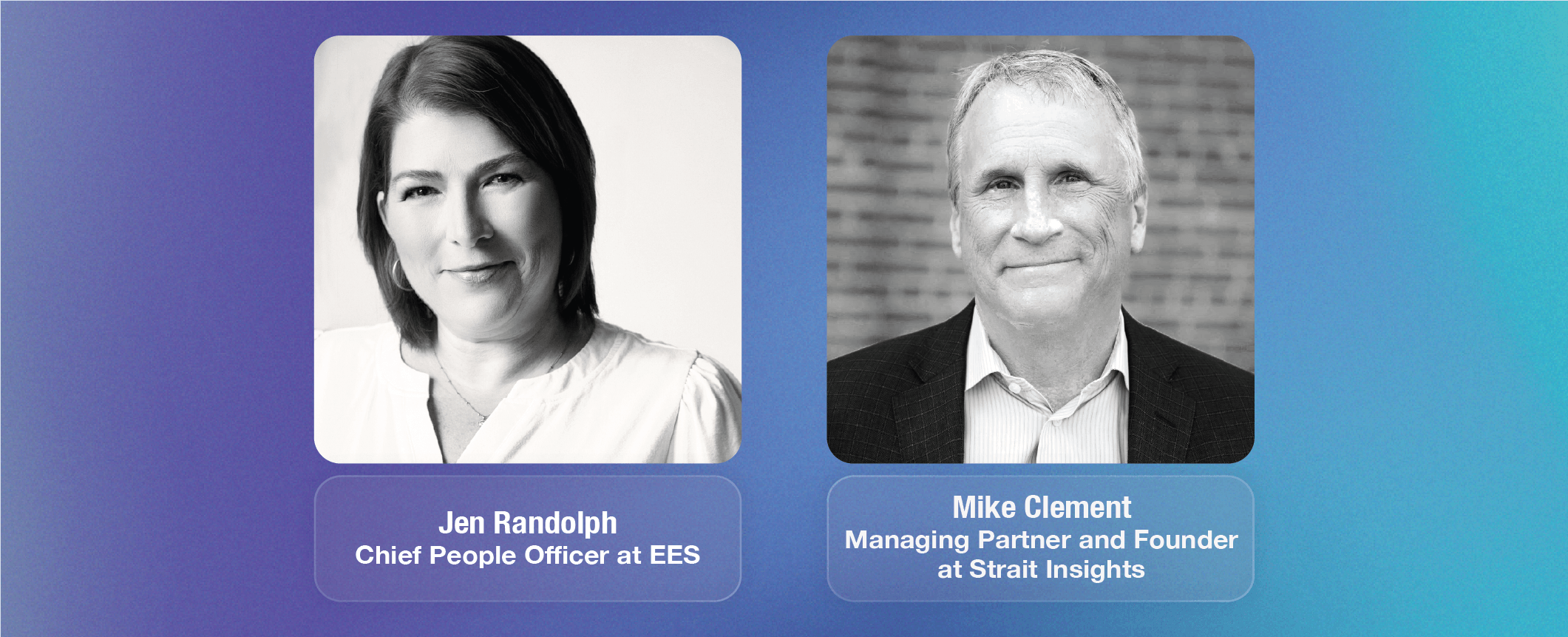
To explore this evolving partnership, I sat down with two leaders: Mike Clement, who served as an HR executive for the retail bank at Bank of America before leading Global Corporate Communications for the company, who currently leads his own firm; and Jen Randolph, Chief People Officer at EES and former HR leader at Bridgestone, PwC, Silicon Ranch and Wounded Warrior Project.
Together, we discussed the growing intersection of employee experience, corporate reputation and employer brand.
What external forces, such as social media, employee activism, transparency platforms, hybrid work and generational expectations, have most accelerated the need for closer collaboration between HR and Communications?
Mike Clement: There have always been societal forces and changes that require close partnership between HR and Communications. The age of the internet, the democratization and real-time sharing of information closed any illusion that we could address internal and external messaging separately. They are often one and the same. While it is important to continue to enable managers, putting more information directly into the hands of employees is essential.
Jen Randolph: Employee expectations have changed a lot over the last several years. Gen Z especially wants to be part of the conversation, not just talked at. The days of leadership making announcements from the top and expecting everyone to quietly fall in line are gone.
That means HR and Communications have to work much more closely together. HR has to create real ways for employees to give feedback and actually feel heard, while Communications has to help drive clear, transparent, two-way communication across the company.
At the same time, AI is adding another layer of uncertainty. Employees are wondering what this means for their jobs, their future and whether leadership truly understands how fast things are changing. These are big questions, and neither HR nor Communications can solve them alone. It takes both teams working together to build trust, clarity and connection.
How have expectations from employees changed in terms of authenticity, transparency and alignment between what companies say and what employees experience?
Jen Randolph: The tolerance for corporate-speak is basically gone at this point. People can tell the difference between a message written by an actual human and one that went through five rounds of legal review and lost all meaning along the way. Work-life balance is the same thing. Saying “we support wellbeing” doesn’t mean much anymore. People want to know: are managers actually held accountable for it? Do employees who set boundaries get penalized? The words on the slide deck matter a whole lot less than what people experience day to day.
Have you seen examples where employee experience directly strengthened, or damaged, overall brand trust? What lessons did that teach internally?
Mike Clement: Sure. The worst cases involve safety [issues]…but even the casual sharing of employee frustration or inside knowledge can have lasting implications that are difficult to unwind. The ability to bounce back from incidents or persuasive cultural issues rests in the response. In many cases, the lack of foresight to plan for predictable issues hampers well-considered and risk-tested responses.
Jen Randolph: At Silicon Ranch, the mission wasn’t just something printed on a website or in recruiting materials. Employees genuinely felt it in how the company operated. Land stewardship, community partnerships, environmental practices, it all held up under scrutiny. When employees talked about the company or recruited people from their network, it came from a real place. We had candidates turn down higher offers to join us because of what they were hearing from current employees. That’s when the employer brand is working the way it’s supposed to.
How important is internal culture communications to external reputation these days?
Mike Clement: While communicating about culture remains important to external and internal reputation, culture isn’t a mission, vision or values poster. It is how you make decisions, how leaders lead, how you react to public events, how people grow in a firm and how you treat your people in both good and tough times. Communicate the thousands of ways you work if you want to build both internal and external reputation.
Jen Randolph: At this point, internal and external brand are basically the same thing. The old way of thinking assumed you could build your external reputation in one room and manage culture separately somewhere else. That doesn’t work anymore. What happens internally gets out constantly through Glassdoor reviews, social media, conferences, recruiting conversations, and how employees talk about the company when leadership isn’t in the room.
How much has employer brand become a competitive differentiator in recruiting?
Mike Clement: Brand remains important, but what is more important is demonstrating during the recruiting process how you work, examples of leadership and how career paths work in your firm. Big brands bring something to the equation, but every brand can disappoint. Focus on how you work together, not …positioning. Amplify experiences over just telling people who you are.
Jen Randolph: In most markets where I’ve competed for talent, employer brand has become the differentiator. At Silicon Ranch, we were competing against tech companies, utilities, and well-funded climate startups. Compensation mattered, of course, but the candidates we really wanted had options. What pulled people toward us was mission clarity and what our employees were saying about their experience. We regularly had candidates turn down bigger offers elsewhere to join the company. You can’t fake that kind of brand equity. You have to earn it.
At Bridgestone, the challenge was scale. Maintaining an employer brand that felt authentic across manufacturing, corporate, and technical teams in different countries is very different than doing it in one centralized office. What we learned is that employer brand has to feel locally relevant while still staying connected to the broader company identity.
What role does storytelling play in employee engagement and retention?
Jen Randolph: At Silicon Ranch, the stories that resonated most weren’t about megawatts or project pipelines. They were about the third-generation rancher we were partnering with and what it meant to approach the work in a way that respected both the land and the community. Those stories helped employees connect to something bigger than just the work itself. They could explain it to their families, their friends, and honestly to themselves in a meaningful way. That kind of connection drives retention differently than compensation alone ever will. At EES Agency, the experience is literally part of what we do for clients, but the same principle applies internally. How we talk about our growth, our wins, our challenges, and where we’re headed shapes whether employees feel connected to something worth investing in long term.
Do employees now expect the same quality of communication internally that brands deliver externally?
Jen Randolph: Yes — and honestly, in some ways the bar is even higher internally because employees have more context than external audiences do. People consume really thoughtful, personalized communication all day long outside of work. Then they open a clunky internal email full of corporate jargon buried in a SharePoint page nobody visits. The contrast is hard to ignore. It sends the message that the company doesn’t value their time or attention.
How do you create consistency between executive messaging, culture initiatives and day-to-day employee experience?
Jen Randolph: Honestly, this is one of the hardest challenges in leadership, and most of the time the disconnect isn’t intentional — it’s structural. What closes that gap is shared language, aligned accountability, and strong manager enablement. Frontline managers are the single most important communication channel in any organization. If they aren’t equipped and aligned, no executive message survives once it hits the real world.
Work-life balance is a perfect example. The policy says one thing, but the incentive structure rewards another. The company talks about wellbeing, but the manager is sending emails at 11pm. Employees don’t experience the policy — they experience their manager. That’s why behavior and accountability matter so much more than messaging alone.
How important is the HR/Communications partnership during moments of organizational change or crisis?
Mike Clement: This is an extremely important partnership. Every response communicates what your culture is about, what your values are. In some cases, your response may include taking specific people actions-someone has to leave. Sometimes culture is all you have to lean on in early response until you have the facts or have determined a direction. HR and communications must be connected at the hip.
Jen Randolph: A common failure is HR solving the compliance problem in one room while Communications manages the narrative in another. Employees end up getting mixed messages. The legal-approved statement doesn’t match what managers are saying. The public announcement doesn’t align with what employees are hearing internally. And eventually the inconsistency becomes the story itself.
How do you navigate sensitive workforce issues publicly while maintaining employee trust internally?
Jen Randolph: The rule here is simple: employees hear it first. Always. One of the fastest ways to damage trust is having employees find out something important about their own company through a press release, LinkedIn post, or news alert before leadership communicates with them directly. It sends a very clear message about where they stand in the priority list — and it’s hard to recover from that.
Mike Clement: Tell the truth. Be transparent. There are times when you are not legally able to disclose all the facts such as a sensitive legal battle. You are weighing the court of employee sentiment, public opinion with a legal settlement outcome. There are other issues such as a merger announcement where employees find out at the same time the market does, but you must be prepared with fast follow-up.
What role do CHROs and CCOs play together in shaping organizational purpose and values?
Mike Clement: While I think the principal leadership capacity for culture rests with a CEO, both these roles have a responsibility for shaping and maturing purpose and values. Sometimes it is the role of the CHRO to be more aspirational while the CCO uses external data to inform a more pragmatic or even skeptical view of values. The tension can get you to a more realistic view. I always say if your poster looks like everyone else’s, you haven’t really communicated your true values.
Jen Randolph: They’re the people responsible for making sure what the company says it stands for actually matches how it operates day to day. The CHRO brings the internal reality — what the culture actually feels like, where the gaps are, how leaders are showing up, what the engagement data says, who’s leaving, and why. The CCO brings the external perspective — how the company is perceived, what stakeholders expect, and where there’s disconnect between the story being told and what people are actually experiencing.