Somewhere along the way, CPG marketers made a collective agreement: if you could figure out which generation a consumer belonged to, you could figure out how to reach them. Gen Z wants authenticity and TikTok. Millennials want purpose and convenience. Baby Boomers want brand trust and familiarity. And Gen X is forgotten (sorry, Gen X!).
As a framework, it holds together neatly. In practice, it’s increasingly costly, and increasingly wrong.
Consumer behavior has shifted in ways that generational labels simply cannot track fast enough. For CPG marketers, the sharper question is not who the consumer is on paper, but what moment they’re in when they reach for your product. Birth year is becoming secondary to behavior.
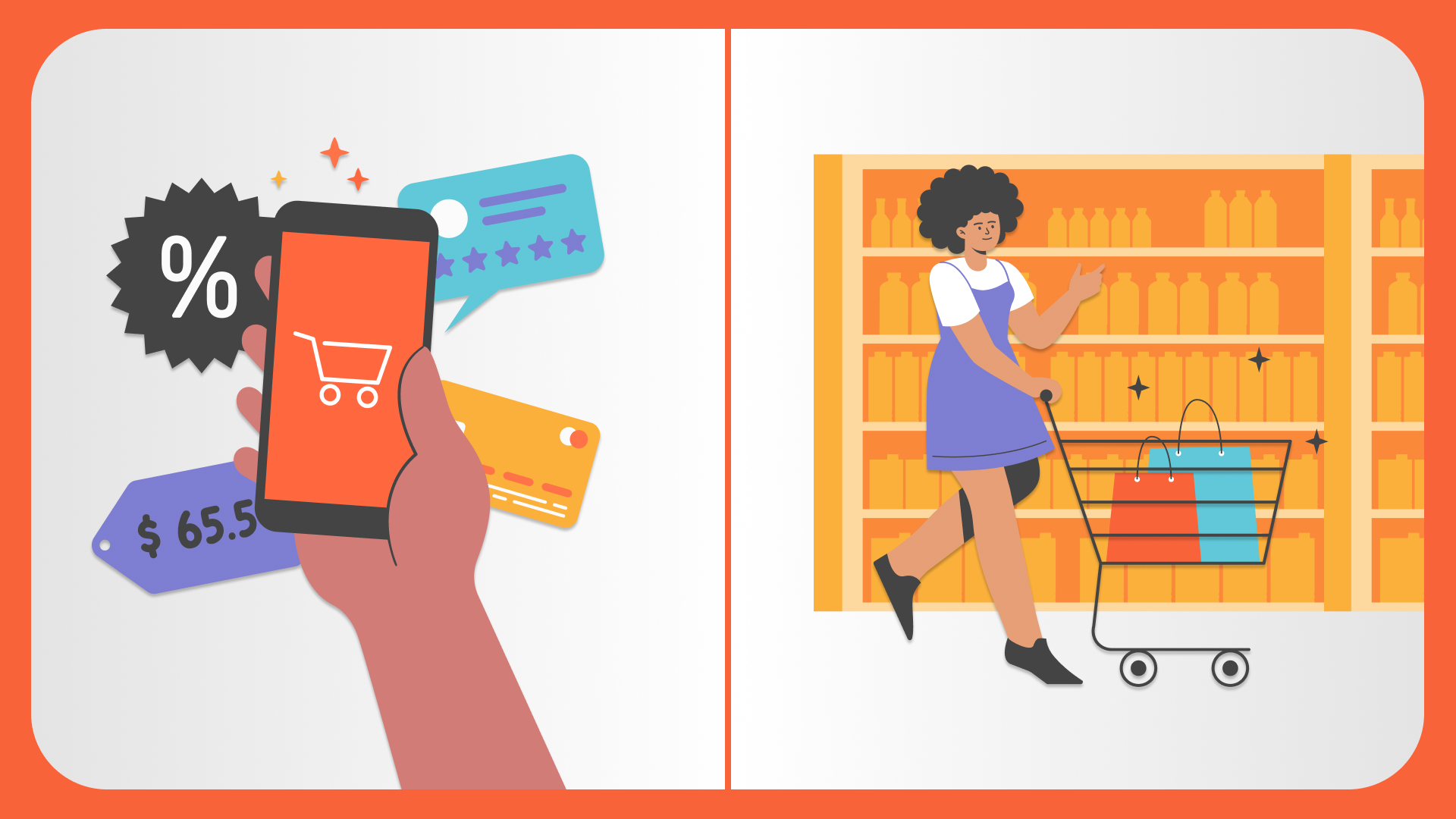
A more predictive divide is emerging: how consumers orient their lives around the internet. At one end are social-first consumers, who discover, evaluate and buy within feeds, creators and algorithm-driven environments. At the other are shelf-first consumers, who anchor decisions in physical retail, routine and in-person experience, with digital playing a supporting role.
That split, more than birth year, is shaping which tactics actually work. And critically, it is not fixed. Consumers move between modes depending on the moment. The brands organizing around these behavior patterns are already pulling ahead.
Generational Marketing Is Breaking Under Its Own Simplicity
Age still has a place in the analysis. It informs media habits, platform preferences and life stage. Nielsen’s 2025 analysis makes the case directly, arguing that marketers should not discount age as a variable.
That’s true. But age alone is no longer a strategy but rather a starting point.
Generational marketing was built on a set of assumptions that made sense when media ecosystems were more linear. Baby Boomers watched primetime television. Gen X adopted cable. Millennials were early social adopters. Gen Z grew up on SnapChat and TikTok. When platform behavior mapped predictably to age, using generation as a proxy for channel strategy was defensible.
That predictability is gone.
Older consumers are increasingly digitally engaged and behaving in ways that don’t match their generational archetype. The idea of a singular “young digital audience” no longer holds.
A 68-year-old who shops on her phone, discovers brands through Instagram Reels and uses a loyalty app at checkout does not fit the Baby Boomer playbook. Neither does a 47-year-old Gen X dad who buys groceries through Instacart and follows wellness influencers on YouTube.
When your segmentation model can’t account for those realities, the cost shows up in both precision and revenue.
The More Useful Lens: Social-First vs Shelf-First Behavior
For CPG planning, behavioral patterns are a more productive lens than generational labels.
There are consumers who operate in social-first mode, often but not exclusively younger, who discover, evaluate and buy within feeds, creators and digital ecosystems. And there are consumers in shelf-first mode, who may use digital tools but ultimately anchor decisions in in-store experiences, routines and physical touchpoints.
The important shift is not generational, it’s behavioral orientation. Social-first and shelf-first are not demographics; they are modes.
While Gen Z may still lead in social-first behaviors, the lines are blurring. Younger consumers are returning to brick-and-mortar for certain occasions, while older consumers are adopting social discovery and mobile-first purchasing. The result is not a clean generational split, but overlapping modes that shift by context.
That shift changes the brief.
Instead of asking which generation you’re targeting, the more productive questions are: Who is in this behavior pattern? Where are they discovering this product? What does the path from scroll to shelf actually look like?
- Vaseline’s recent marketing evolution makes this case directly. The brand has leaned into a social-first, innovation-led model, designing products and campaigns that are built to travel through creator ecosystems and algorithm-driven feeds. The result is a brand that behaves like a native participant in digital culture, not just an advertiser within it. Behavior, not age, is the organizing principle.
- Knorr’s recent #ServingSingles campaign extends the same logic into culture. By tapping into dating dynamics and social-first storytelling, the brand created content designed to live within feeds and be shaped by participation. It just so happens to appeal generally to Gen Z and Millennials based on where they are in their lives.
The campaign wasn’t just distributed on social, it was built for it. That distinction matters. Social-first consumers expect brands to behave like content, not interrupt it. Consumers in social-first mode expect commerce and brand interaction to be embedded and frictionless. Those in shelf-first mode expect clarity, trust and ease at shelf. Age is secondary to which mode they are in, and when.
Lifestyle Occasions: The Creative System That Actually Scales
If digital behavior is the more useful channel lens, lifestyle occasions are the more effective creative organizing system. Occasions are the repeatable, emotionally resonant moments that drive purchase: the post-workout hydration ritual, the late-night comfort snack, the Sunday reset, the weeknight dinner that has to come together in 20 minutes.
They are rooted in context, and critically, they travel across generations in ways demographic labels never can. A 26-year-old and a 50-year-old can both be in the same moment: “I need something comforting tonight.” The channel path may differ, but the emotional need, and the creative opportunity, is shared.
That has real implications for efficiency. For brand teams working with constrained budgets and limited production capacity, occasion-based platforms allow for broader reach without fragmenting the message.
Recent research reinforces this shift. Gen Z and Millennials, for example, are increasingly connected by shared situational pressures, financial stress, well-being concerns and a desire for simplicity, while generational identity plays a smaller role in decision-making.
Kraft Mac & Cheese’s “Best Thing Ever” platform shows how this plays out in market. The campaign leans into emotional resonance and cultural relevance, reinforcing the brand’s role in moments of comfort, nostalgia, and self-expression.
While the work shows up across channels, the underlying platform is not tied to a generation. It’s tied to an occasion and an emotional need. The result is a campaign that travels, reaching consumers in different modes without fragmenting the message. The occasion does the work of expanding the audience.
Integration Is the Multiplier
This is where the channel and creative arguments converge. Occasion-based strategy only delivers when it shows up consistently across every touchpoint: paid social, retail shelf, influencer content, e-commerce product pages, and in-store display.
When those touchpoints fragment, the narrative breaks. Shoppers see one message on TikTok, another on shelf, and a third in a retailer’s circular. At that point, the occasion, and the impact, dissolves. This is the structural issue behind many underperforming CPG campaigns: marketing, social, retail, and influencer teams operating in a silo, each executing well, but not building a coherent story.
Integrated communications where you are aligning message, channel and creative around a single, moment-led narrative, is what closes that gap. In a fragmented media environment, integration is not just operational discipline; it’s a competitive advantage.
Strategy Starts With the Moment
The CPG brands pulling ahead are not abandoning data, they’re reframing it. They are identifying the right moment, designing for how consumers actually discover and buy, and showing up consistently across every channel where that moment lives. Birth year still has a role to play, but it is one signal among many. The buying moment is where strategy actually begins.