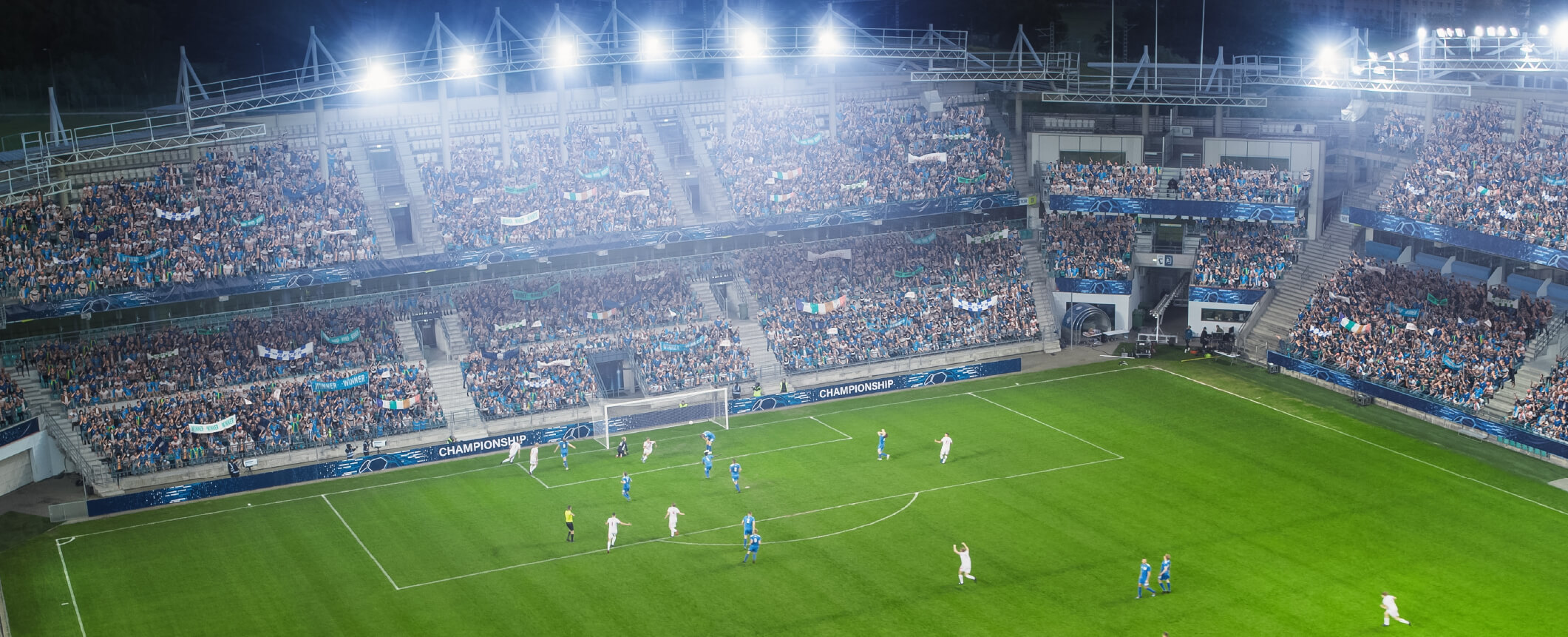
Somewhere around the third week of this year’s World Cup tournament, I started keeping a running list. Not of scores or standings, but of moments: a marching band in Kansas learning a national anthem overnight; a stadium full of Norwegians rowing an invisible ship; a city running out of beer, unable to keep pace with one country’s fans’ celebrations; fans with blue trash bags in hand, on their knees, long after the final whistle, cleaning up a mess they didn’t make.
None of it was planned by a brand or came from an agency brief. And yet, somehow it traveled further and faster, with more genuine warmth, than most campaigns in recent memory. Strip away the soccer and what you’re left with is a masterclass in brand building: authenticity, ritual, character and values that show up as action.
Lawrence, Kansas didn’t need a strategy deck
Algeria’s team was based in Lawrence, a college town of about 95,000 people that most Americans couldn’t find on a map before this summer. What happened next wasn’t in anyone’s plan. The University of Kansas marching band learned “Kassaman,” Algeria’s national anthem, and performed it during a practice session for the team. Lawrence residents who had never previously met an Algerian hung Algerian flags and organized watch parties for a country they’d known about for three weeks. When Algeria drew Austria 3-3 to advance, Algerian fans poured into downtown Lawrence holding handmade signs that just said, “Thank you, Lawrence.”
Nobody wrote that story, and more importantly, nobody could have. It happened because a community decided to show up, without being told to and without a hashtag telling them how. Authenticity like this is next to impossible to manufacture on command, but it is possible to build the conditions for it. Give a real story room to happen, then get out of the way.
The Norwegians gave us a ritual, and rituals travel
After Norway beat Senegal at MetLife Stadium, the fans did something odd and wonderful: shoulder to shoulder, they mimed rowing a Viking longship, chanting “ro” in unison. What should have stayed in that stadium instead showed up on subway platforms, on escalators, in the middle of Times Square – and created viral moments across social media. Back home in Oslo, people marched to the royal palace gates to wake up the king.
A moment happens once, but a ritual gets picked up by strangers who weren’t even there and carried somewhere else entirely. That is the difference between a campaign that gets a nice write-up and one that actually becomes part of the culture. If your brand has something like this, a signature gesture, a bit of shorthand people outside your walls want to borrow, protect it. It’s worth more than most of what gets built from scratch.
Boston learned what 50,000 Scots look like
The Tartan Army showed up in Boston roughly 50,000 strong, with bagpipes, kilts and a thirst that reportedly drank one taproom out of an entire summer’s supply of Boston Lager in a single stretch. Bartenders said they’d never seen anything like it. And somehow, through all of it, Scotland’s fans left the city charmed instead of exhausted. So much so that The Boston Globe published a full-page ad thanking Scotland’s “Tartan Army” for the joy, bagpipes and camaraderie they brought to the city during the 2026 World Cup. In response, the Scottish fans pooled together to buy a full-page thank you ad in Scotland’s The Herald.
Maybe that’s just the national character, but maybe it’s something else. Either way, it’s a lesson: reputation gets built in the rooms you walk into, well before anyone issues a statement about who you are. The Tartan Army’s reputation of warmth and merriment walked into every bar and street corner in Boston ahead of them, and their behavior just confirmed it. That’s the whole game in reputation management. The Tartan Army didn’t need anyone to vouch for them, they just kept being exactly who they said they were, bar after bar, block after block.
Japan cleaned up, again
After Japan’s matches, in Arlington and beyond, their fans stayed behind with blue trash bags, quietly collecting litter that in a lot of cases wasn’t even theirs. While it was a sight to behold, their coach called it “normal.” Just something they do. It’s happened at enough tournaments now that it’s stopped being a surprise and turned into an expectation, which honestly might be the more impressive outcome.
No campaign built that reputation. No messaging strategy did either. Instead, it was values expressed as behavior, over and over, until the behavior became the brand. That’s a much harder thing to build than a tagline, and a much harder thing to fake.
The lasting impact of World Cup 2026
Line these four stories up and the pattern isn’t subtle. The best PR moments of this entire tournament had nothing to do with press releases, activations or paid amplification. They came from communities acting like themselves, rituals with room to spread, character that held up under scrutiny and values that showed up as action rather than a line in a mission statement.
Spain lifted the trophy this year. Only one team ever does. But that’s almost beside the point when you look at everything else this tournament produced. Lawrence didn’t win anything, Norway went home early, and Scotland and Japan weren’t lifting a trophy either. And still, all of them walked away with something that outlasted the scoreline, a story the world actually wanted to hear, and an audience that was actually listening.
That’s the baseline work of what we do. Not chasing a single win, but telling stories honest and human enough that people lean in on their own. Every brand we work with, every client trying to build or protect a reputation, is playing that same game long after the final whistle blows. There’s only one champion, but there’s no limit on who gets to tell a story worth remembering.